Policy tracker sheet · Dec 2021
65 rows · what the columns actually held
- 01
Status · 1, 2, 0, or blank in 32 rows
- 02
House Number · “two numbers - 369 and 368”
- 03
Survivor / Relative Input · “3” in one row, a paragraph in another
Same column, two formats
- 04
Indigenous Sponsorship · “None,” “None Self-Identified,” “Not Publicly Available”
- 05
Last Update · blank in 30 rows
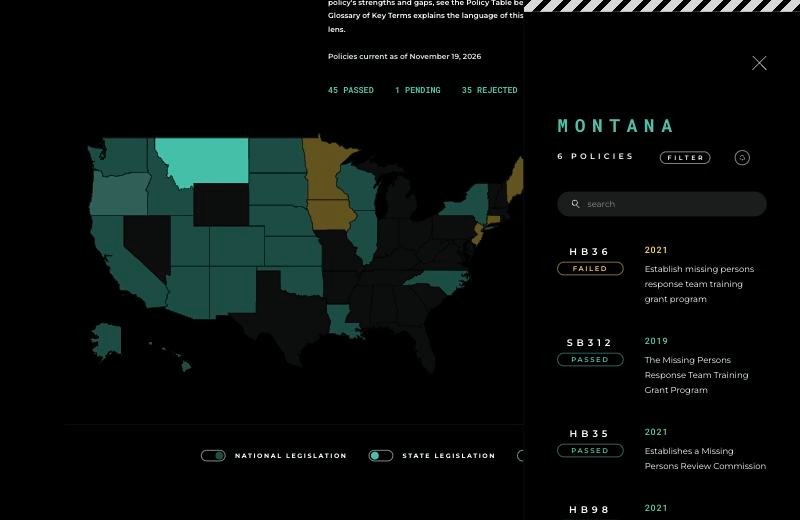
The sheet behind the original map · 2021
01 — The problem
The spreadsheet fell apart
The tracker began as an intern's spreadsheet. Volunteers kept it up without a shared format, so one column held a number in one row and a paragraph in the next.
The Two Sigma Data Clinic built a map on top of it in a 2021 hackathon. When I took over its upkeep, a single entry took 2 hours and 10 minutes: find the bill, read it, then answer each question by hand.
The analysis · every policy
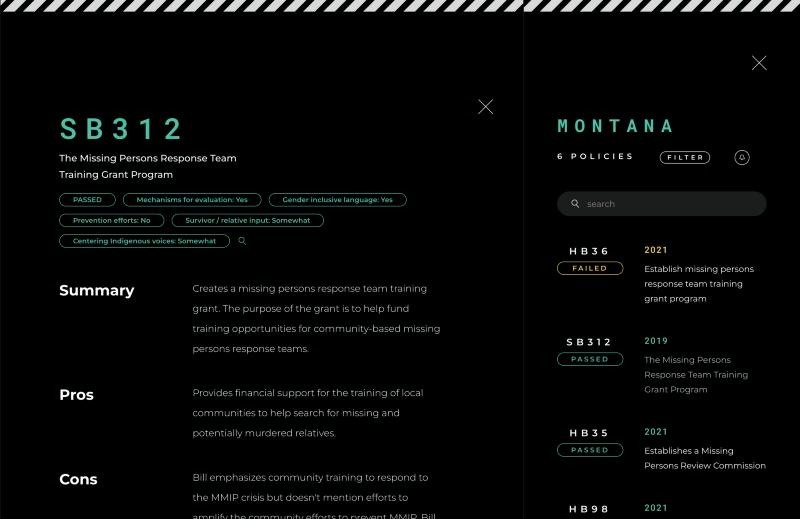
One column each in Airtable
- 01
Summary, strengths and gaps
- 02
Mechanisms for evaluation?
- 03
Gender-inclusive language?
- 04
Prevention efforts?
- 05
Survivor and relative input?
- 06
Centering of Indigenous voices?
- 07
Indigenous sponsors?
Matched against a database of Native legislators, not guessed
Analysis questions · from the 2021 sheet's columns
02 — The question
Could a model do the first read?
The slow part wasn't typing. It was reading a long bill and answering the same questions every time, in the same format.
I wrote those questions into a tool: paste a LegiScan link, a government page or a PDF, and it returns one row, matching the columns of the Airtable base behind the map.
Analyzer output · AK SB211
One row, ready for a person to check
- 01
Missing/murdered Indigenous Women; Report · Failed
- 02
Mechanisms for evaluation · Yes: a final report and recommendations
- 03
Gender-inclusive language · Yes: “Women, Girls, and Two-Spirit Persons”
- 04
Prevention efforts · Yes: police training requirements
- 05
Survivor / relative input · No
A reviewer checks every answer against the bill
- 06
Categories · Taskforce, Law enforcement, Data collection
From the analyzer's example export · 2024
03 — The result
The job became review
An entry went from 2 hours and 10 minutes to about 10, for less than a penny. Most of that time is a person checking the draft against the bill.
I led a volunteer team through it: Trini Simms, Ellis Clay, Rushika Dias, Shalini Basu and Meghana Nayak. I trained them, answered their questions and changed the tool when they hit problems. They found it easy to use and added about 30 policies.