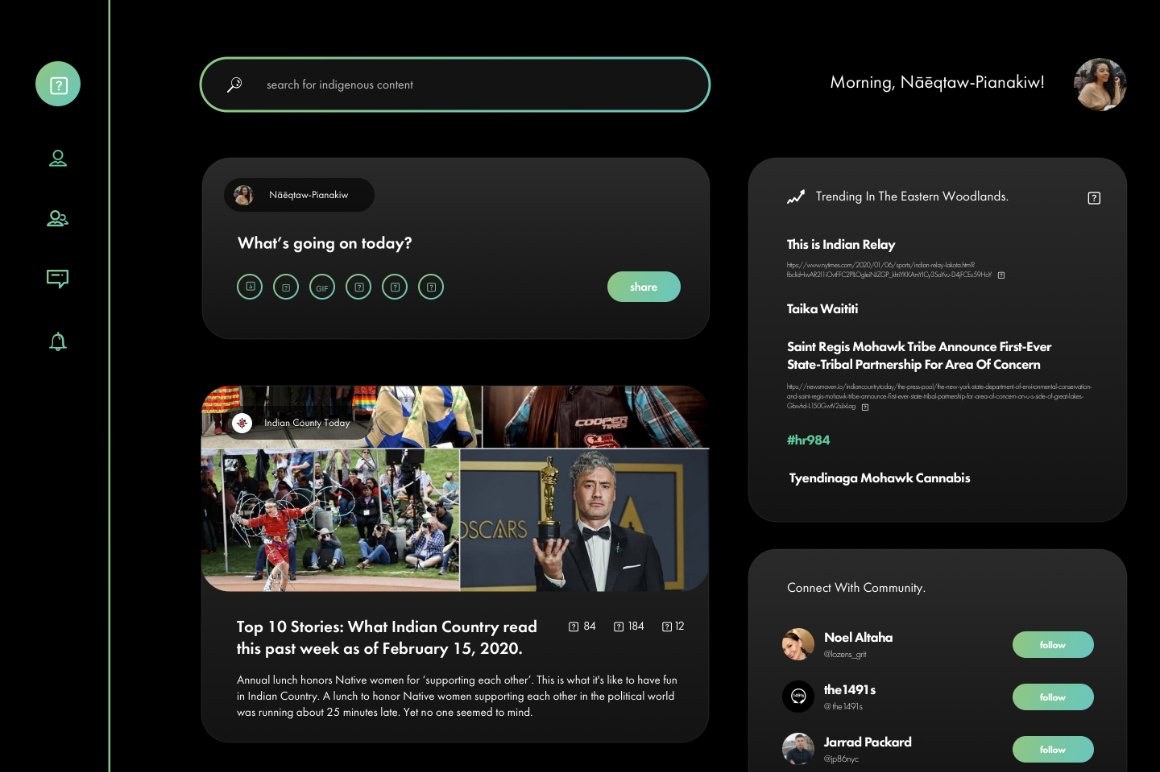
First Sketch prototype · 2020 · a news feed for Indian Country
01 — The problem
The harm was in the comments
Facebook already has high penetration and adoption in Indian Country. In my own community I watched the comment threads surface old trauma and turn people on each other. People carrying trauma needed a way to heal, not another place to fight. Another social platform of my own would have hosted the same fights with a different aesthetic.
Interview script · May 2020
Written with Ariel Richer · questions only; answers stay anonymous, as the script promised
- 01
Do you feel like you’ve been able to find culturally appropriate content on social media?
- 02
Would you say social media platforms are impactful in building and strengthening local native communities?
- 03
Some of these spaces can become toxic or unwelcoming spaces. Would you be interested in a social media safe space catered to Natives?
- 04
Sometimes a safe space isn’t enough. Would you be interested in connecting with an Indigenous therapist through this social safe space?
Here the script turns from social to care
- 05
Are you more likely to access mental health services if the provider is Native American, Alaska Native or Indigenous? Why or why not?
- 06
…what method would be more comfortable for you, texting, or video chat, and why?
02 — The question
We tested a hunch about stigma
We set out to learn what kept people from care, and we expected stigma. Ariel Richer, an implementation scientist, and I wrote the script, starting with social media and turning to care at question four. Noel Altaha built a list of 77 people, and I led six interviewers through 50 interviews in two weeks, then kept going past 70.
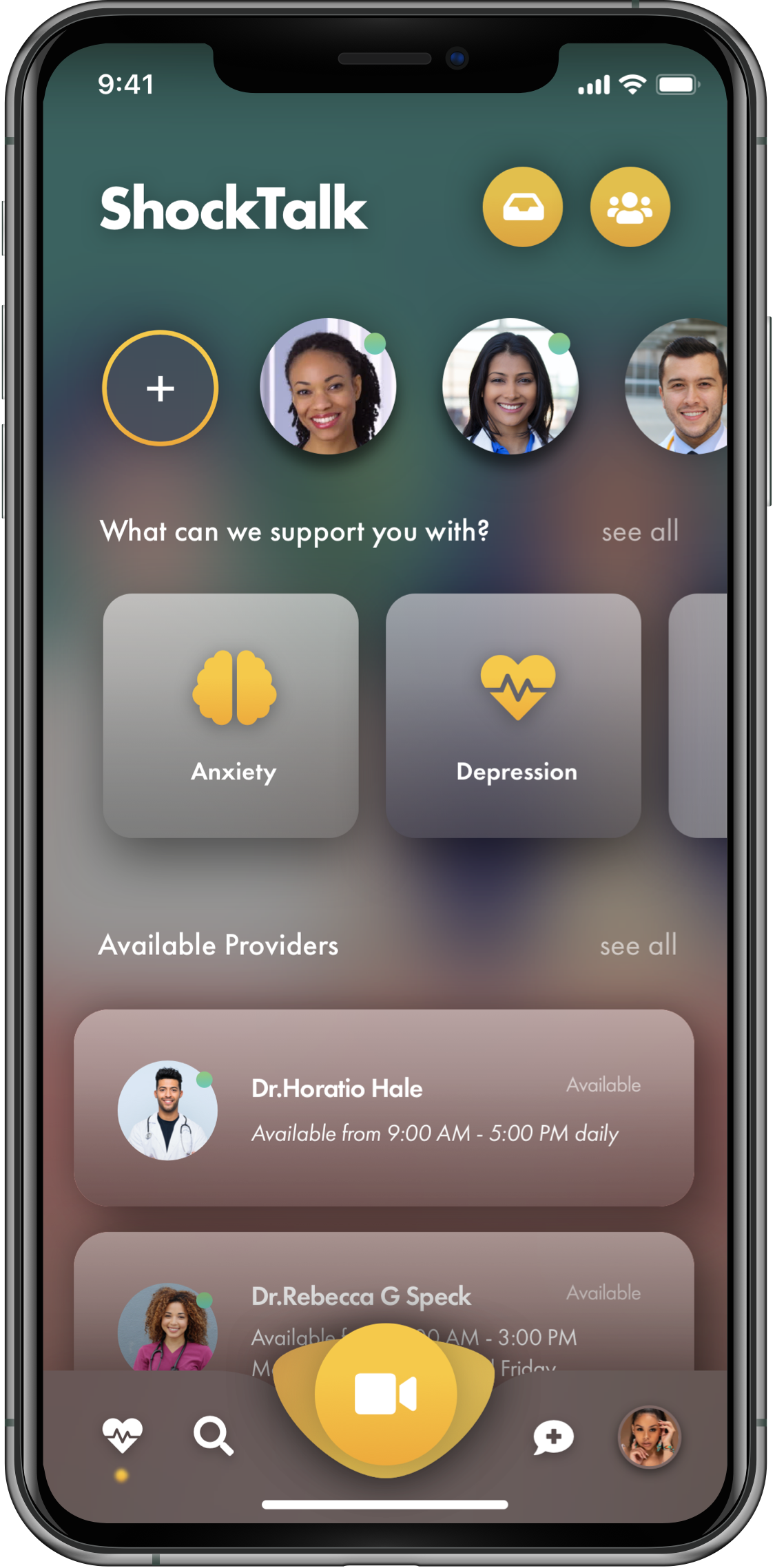
InVision prototype shown in interviews · iPhone X · 2020
03 — The finding
We were wrong about the barrier
The reception to ShockTalk’s InVision prototype was, shockingly, unanimously positive. Core insights emerged: nobody wanted Western clinical care alone. People wanted a Native provider, and there weren’t nearly enough.
Providers we interviewed said they could “work around the clock and still not make a dent in the caseload.” Stigma wasn’t the barrier; supply was.
Dr. Rose Weahkee and Dr. Marcella Ronyak of IHS confirmed the gap. I began exploring peer-based solutions, which led me to Minette Galindo and CHAP, IHS’s Community Health Aide Program: it grows care by training people from the community.