Notebook · 2026 · the first plan: a group as a booking option
01 — The plan
Healers and peers, booked one-to-one
ShockTalk only offered one-to-one sessions with clinicians, and Discovery had shown there weren’t enough of them. I planned to add healers and peers the same way: as one-to-one providers, with a group option on their booking menu.
Notebook · 2026 · groups get their own row, open to join
02 — What they asked for
Groups, not appointments
Over 14+ conversations, including a peer I met every two weeks for three months, I kept hearing the same request: open groups anyone can join, not a clinician running a group for a fixed set of people. People had asked for group sessions in Discovery’s second round, back in 2020.
So groups got their own row on every topic, beside one-to-one providers, and shipped first. No traditional healer is on the platform yet; the first is about to join.
Series: Woven Identities, join once → Program: the survivors’ circle, pick each session
03 — Shipped, then corrected
Series, then programs
The first version shipped as a series: join once and you’re enrolled in every session, with one calendar invite and a group chat in between.
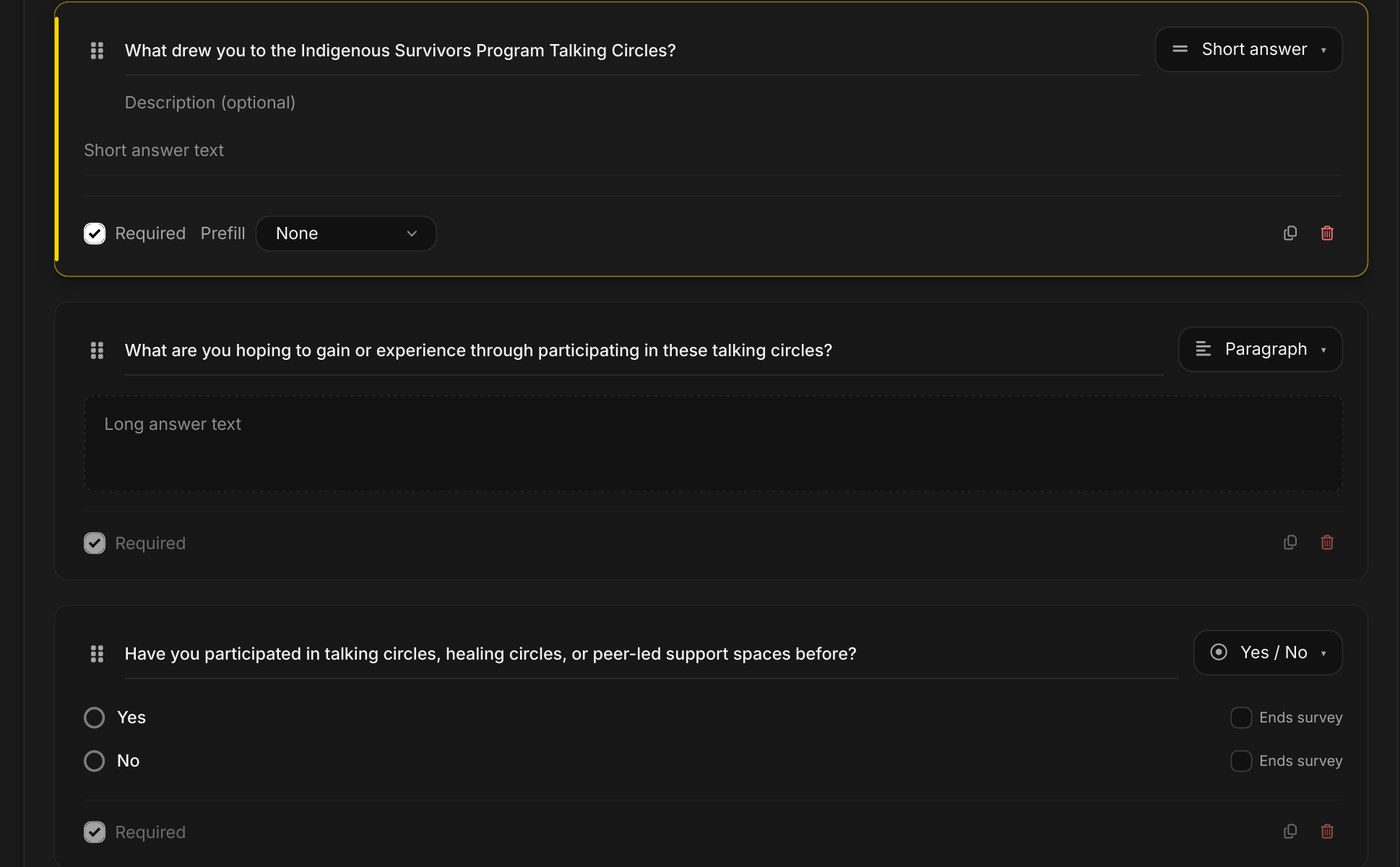
Then Marianne moved her survivors’ talking circle onto ShockTalk, and what it needed shaped the next version: programs, where you tap a date to join that session. Now organizers choose either one. Her circle also screened people with a Google Form, and she asked how to get it all into one place.