A New Voyage to Carolina · 1709
From John Lawson's Woccon word list
- 01
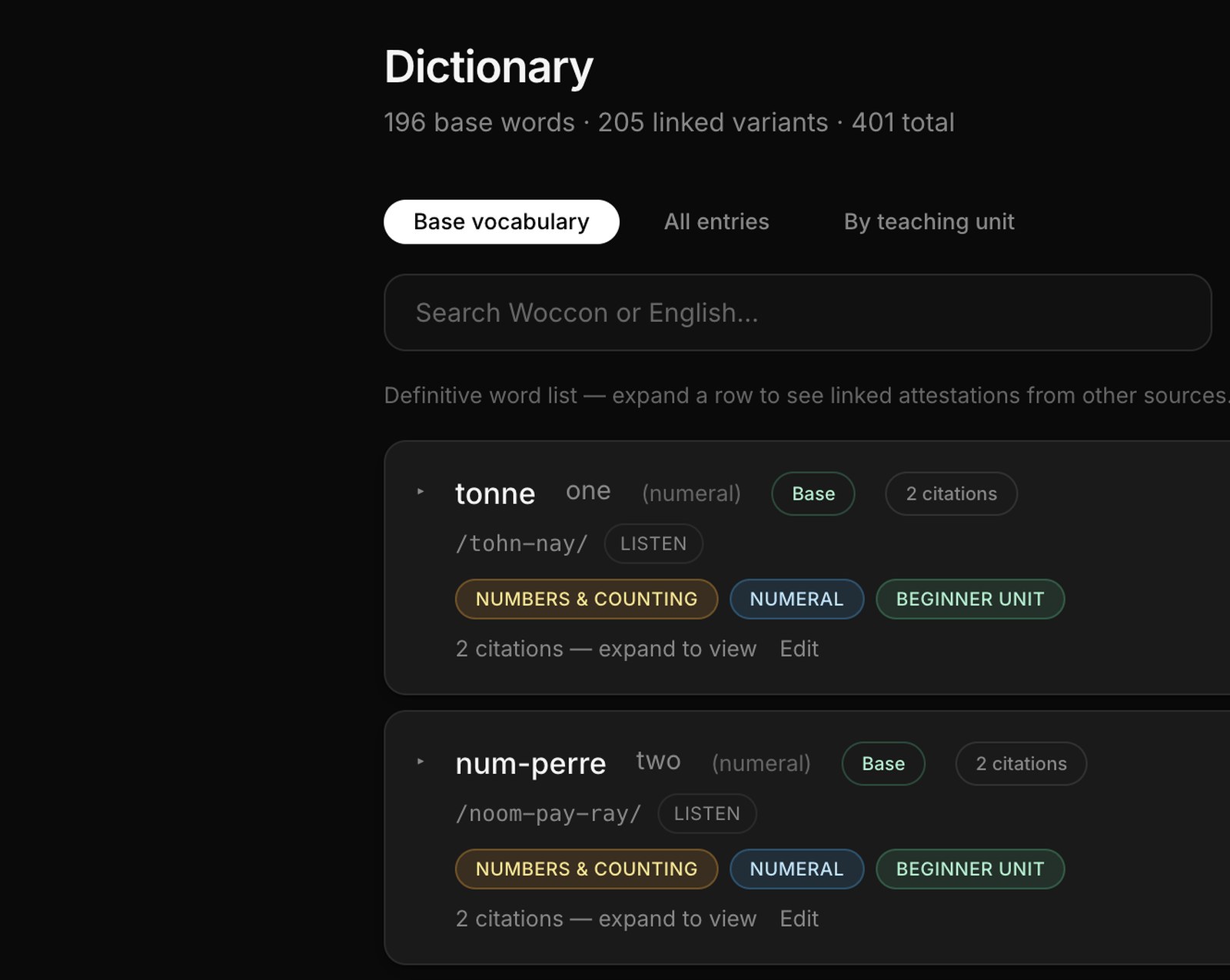
One · tonne
- 02
Two · num-perre
- 03
Fire · yau
- 04
Water · ejau
- 05
Acorns · roosomme
rue-sa-may, as the committee later agreed to say it
Lawson's word list · 1709 · an explorer's ear, not a linguist's
01 — The problem
Immersion isn't an option
Woccon is known from 143 words that John Lawson, an English explorer, wrote down in 1709. No one has spoken it for about 300 years. Everything else we know is scattered across linguistics papers full of notation most readers can't decode, so it's hard to know if you're even reading them right.
When members of the language committee tried the tutor on Messenger in summer 2025, they liked it. The one thing they asked for was immersion, which is how you'd learn any living language. With no speakers left, it was never possible.
Language committee · Jul 20, 2025
Comparing Woccon and Catawba word sets
- 01
Dr. Roberts: What differences do you see between the Woccon and the Catawba for goose?
- 02
Rebecca Fecher: The au versus the a.
- 03
Dr. Roberts: Au in Woccon shows up as a in Catawba. But let's see if that holds up everywhere. It doesn't.
- 04
Dr. Roberts: Sometimes you can have multiple sets of sound correspondences happening.
Why the engine never makes a word from one match
Otter transcript · Jul 20, 2025 · lightly edited for reading
02 — The question
From scattered papers to one rulebook
Rebecca Fecher did much of the groundwork, often on her own time: a cleaned-up spelling system and a dictionary built from Lawson's list. As a committee, with the Siouan linguist Dr. Corey Roberts, we read the research together and worked out how to say each word.
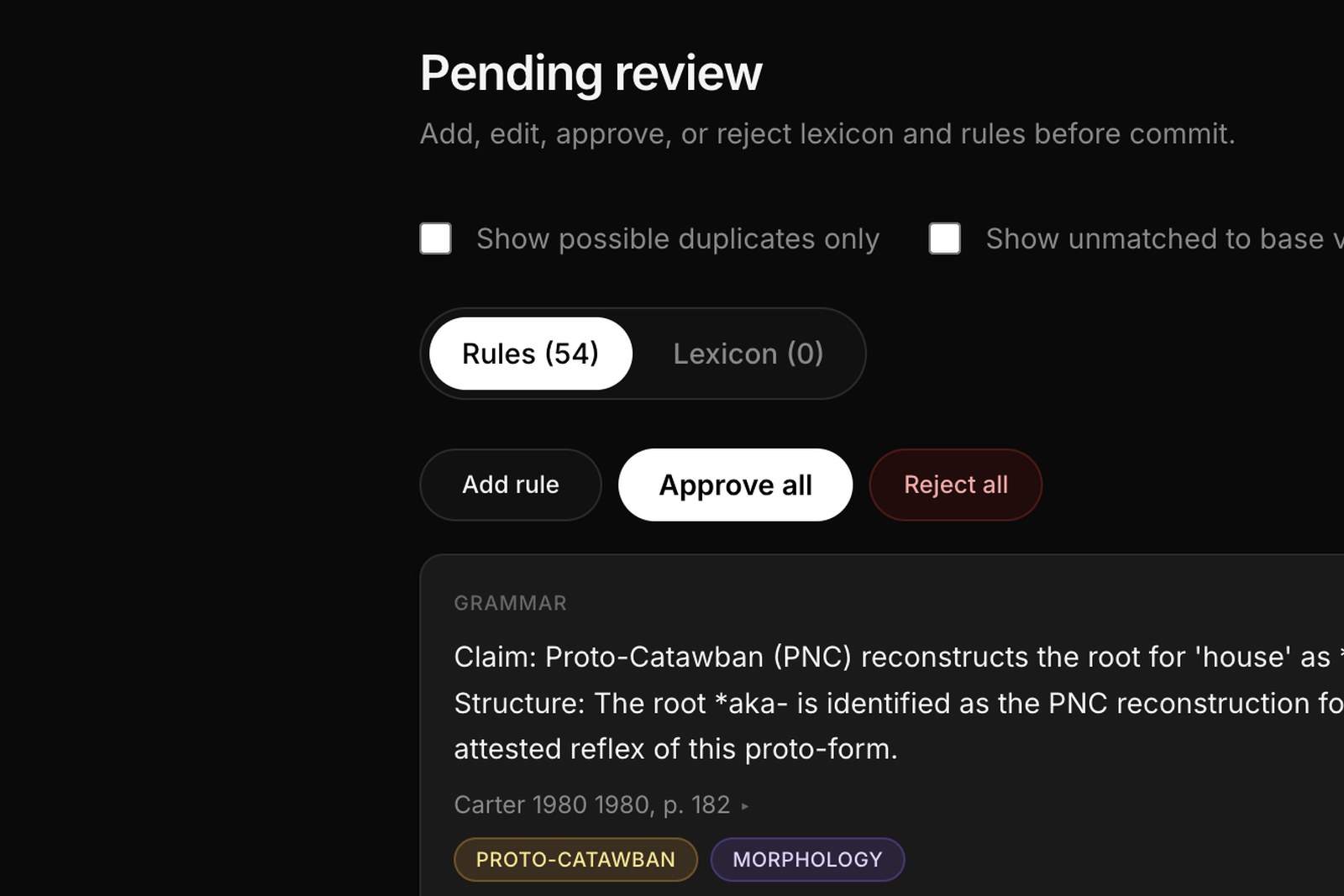
My part was a shared panel for that work: an engine drafts rules from the papers we gathered, each with its source, and a person approves or rejects every one. I built it for the whole committee, but the committee hasn't met in a while, so today it's mostly me, working from Rebecca's research.
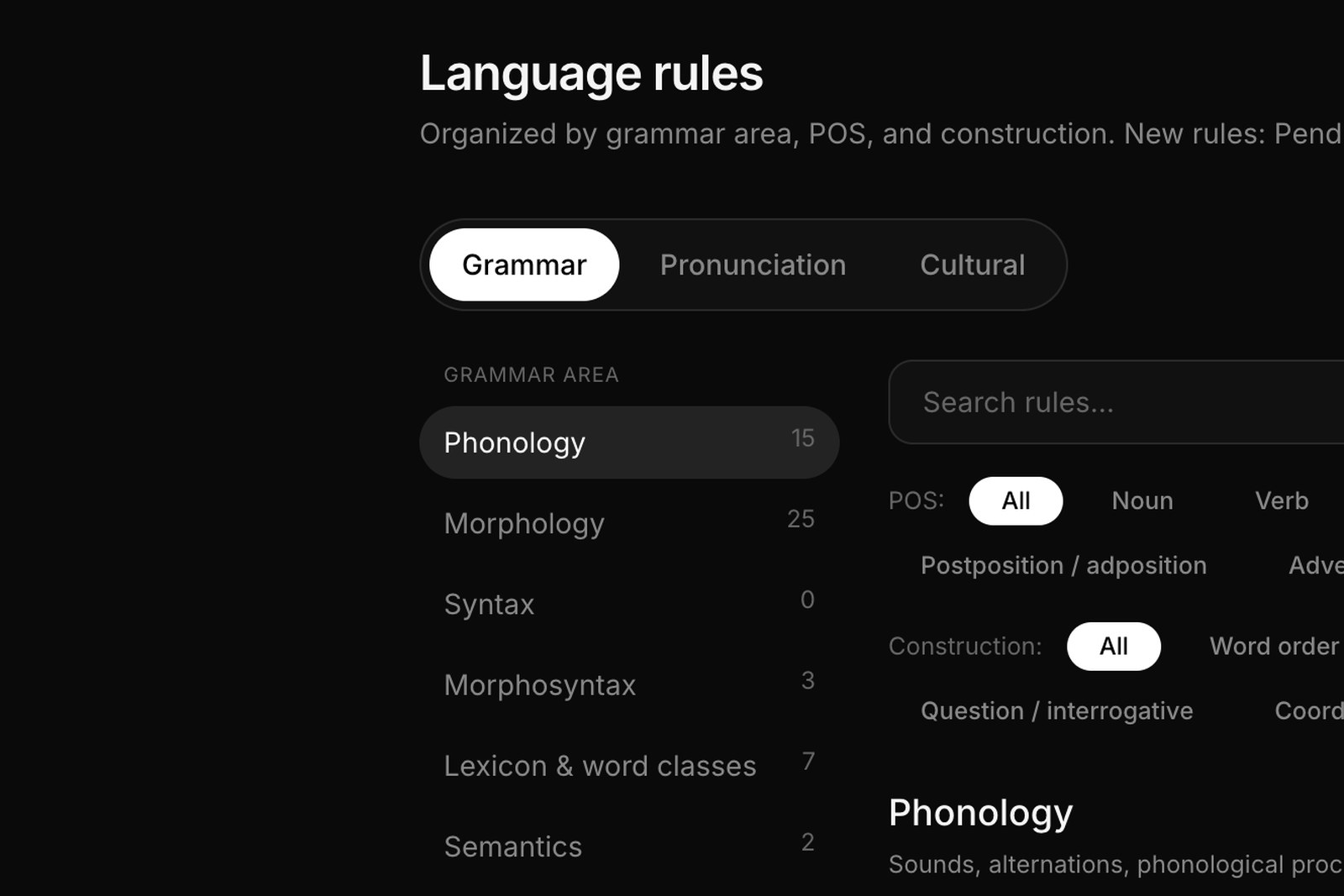
Language rules · 2026 · every rule tied to its source
03 — The result
The product is the database
What we built isn't really a chatbot. It's a database of every grammar, pronunciation and history rule we could find, each tied to the page it came from, plus a dictionary with the committee's pronunciations and audio. As far as we know, it's the most complete Woccon source there is.
The shift is who can use it. Instead of decoding linguistics papers alone, anyone can ask the tutor a question in plain English and get an answer grounded in that research. Extending Woccon through Catawba comes next; the groundwork is built.